
Best Central Vacuum For An RV: A 2026 Buyer's Guide
By The InterVac Design Team · Updated 2026
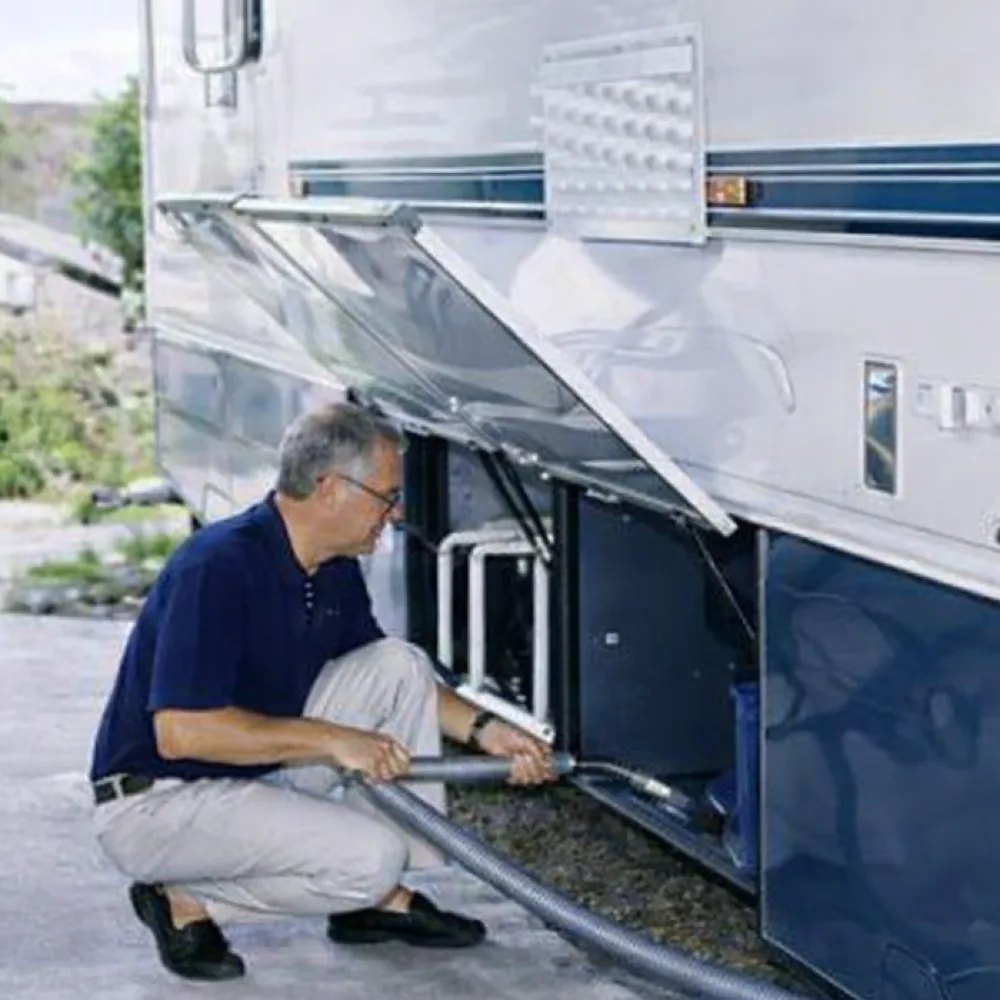
If you keep dragging a portable vacuum out of a basement bay every time the dog tracks in sand, you already know the real problem with cleaning an RV. It is not the dirt. It is the wrestling. A built-in central vacuum solves that by living inside the coach, ready in seconds, and reaching the whole floor plan on one hose. This guide walks through how to pick the right one without overspending or guessing.
Why A Built-In Beats A Portable In An RV
Space is the whole game in an RV. A portable canister or upright takes up a cabinet or a bay you would rather use for something else, it has to be unpacked and repacked, and it is heavy to move around a narrow aisle. A built-in system flips all of that. The motor unit tucks into a cabinet, a bay or a toe-kick, and all you pull out is a lightweight hose. Nothing to lift, nothing to store, nothing rolling around while you drive.
The honest tradeoff is the install. A portable works the moment you plug it in. A built-in needs a one-time mount and a power connection. For most owners that one afternoon of setup pays off every single trip after.
How To Choose By Coach Length And Layout
Start with your floor plan, not the spec sheet. A compact travel trailer and a 40-foot Class A have very different needs, and buying more power than you need just costs money and cabinet space.
- Compact Trailers And Vans. A single inlet near the living area usually covers the whole space. Prioritize a small body and an easy mount.
- Mid-Size Class C. One central inlet still works for most layouts. Confirm the hose reaches the bedroom and the cab area from where the unit sits.
- Large Class A Coaches. Look for more suction and a longer or second hose run so a slide-out bedroom is not at the edge of your reach.
Hose Reach: The Whole-Coach Concern
This is the question owners forget to ask until install day. With a built-in, you are cleaning from a fixed inlet, so the hose has to stretch from that point to the farthest corner you care about. A good stretch hose extends well beyond its resting length, which is how a single inlet can cover a surprisingly long coach. Before you commit, picture the inlet location and mentally walk the hose to the bedroom, the bathroom and the cab. If it reaches comfortably, you are set. If it is tight, a longer hose or a second inlet solves it.
Pick the inlet spot first, then the model. Reach is decided by where you mount, not just by what you buy.
If you are weighing the hose question against a cordless stick vacuum, our piece on why a built-in wins over a Dyson stick in an RV or boat covers reach and suction over time in more detail.
Bagged HEPA Vs Bagless
In a small living space, where the dust ends up matters. Bagless systems save you from buying bags, but every time you empty the canister you release a cloud of fine dust right where you sleep and eat. Bagged HEPA captures that dust and holds it, so emptying is clean and the air stays clear. For an RV, we lean bagged HEPA almost every time. If you want the full picture on swap intervals and which bag fits which model, see our simple guide to central vacuum bags.
The Toe-Kick Sweep Option
This is the feature RV owners rave about. A toe-kick inlet sits low, near the floor, usually under a cabinet. You sweep crumbs, sand and pet hair toward it with a broom or your foot, and the system pulls it straight in. No dustpan, no bending, no chasing a pile across the floor. For galley messes and entry-door grit, it is genuinely faster than any portable.
Install Basics
You do not need to be a fabricator to do this, but it helps to plan it. The three decisions are where the unit mounts, where the inlet goes, and how it gets power. The unit wants a spot that is out of the way but accessible for bag changes. The inlet wants to be where you naturally start cleaning. Power is either 12V or shore power depending on the model, so match that to how you camp. Plenty of owners do the whole job themselves in an afternoon; if you would rather not cut into a cabinet, any RV tech can handle it.
A Model Shortlist For RVs
Here is where most coaches land. These are the systems we point RV owners to first.
- The CS8 is the toe-kick favorite for motorhomes and trailers. Compact body, full-length reach, and the sweep inlet most RV owners want.
- The CSRM is the remote-mount option for larger coaches that need extra reach and suction from a unit placed out of the way.
- The RM Central Vacuum is the proven workhorse with the suction to handle sand, crumbs and pet hair trip after trip.
You can compare all three side by side on our RV vacuums page, or answer three quick questions in the Find Your Vacuum tool below to get a direct recommendation.
Frequently Asked Questions
Will One Hose Really Reach The Whole RV?
Is A Built-In Vacuum Hard To Install In An RV?
Bagged Or Bagless For An RV?
What Is The Toe-Kick Sweep Option?
Related Reading
Not Sure Which RV Vacuum Fits Your Coach?
Answer three quick questions and we'll point you to the right built-in system in under a minute.